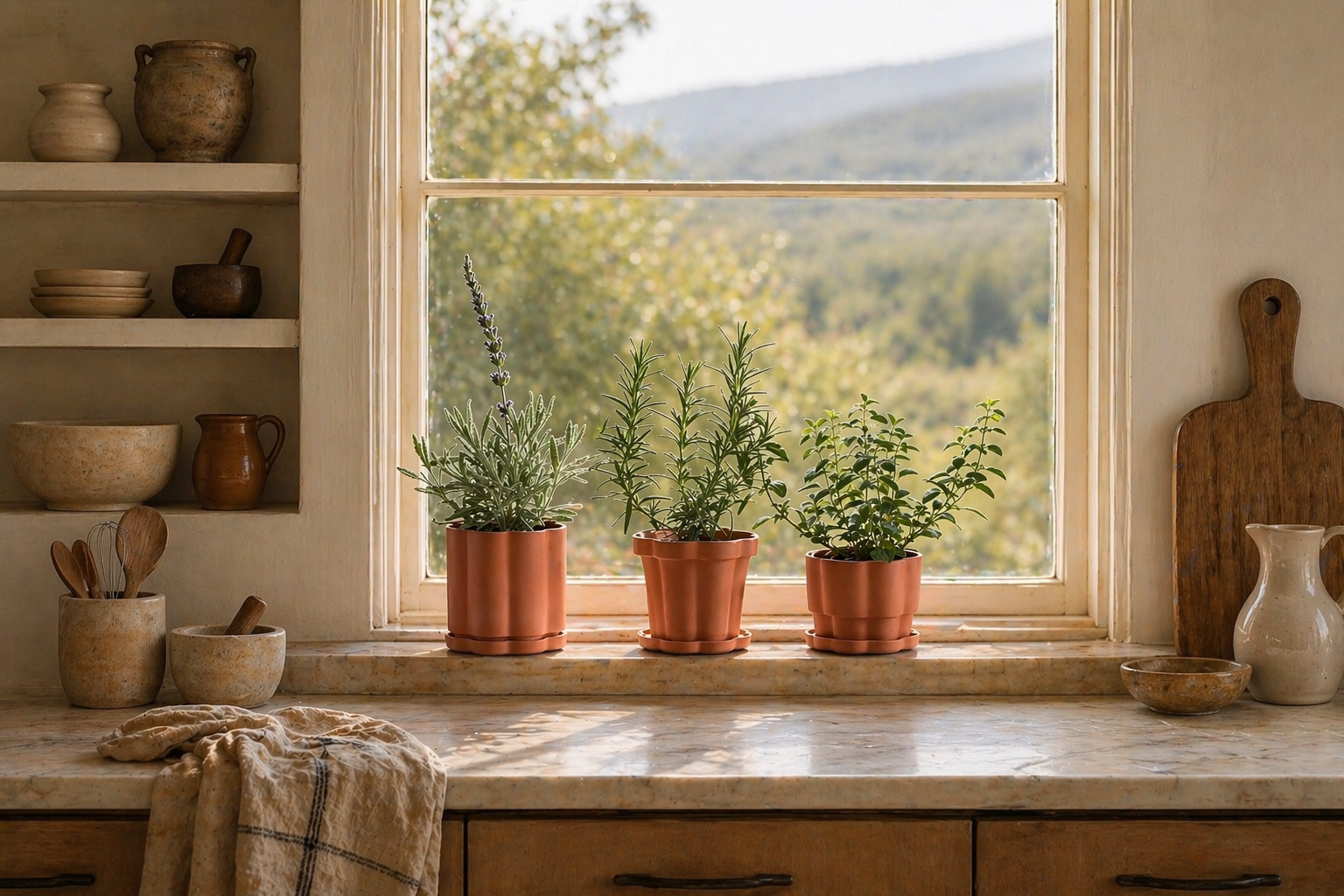
The Scallop Collection
Forms inspired by vintage French bakeware. Unglazed terra cotta, designed to patina over time. Sold individually or as a set.


Set of 3 Terra Cotta Planters
The complete Scallop Collection terra cotta set: Petite, Taper, and Column planters together. Each piece is individually cast and finished by hand in Livingston Manor, NY.
From Screen to Studio
Design
Each form is meticulously designed digitally in 3D software, allowing for millimeter-level precision.
Mold
Plaster is casted in 3D printed forms to create reusable slip-casting molds—the same technique used in traditional slip casting.
Cast
Liquid ceramic is poured into plaster molds. The clay walls form slowly as the plaster absorbs water. The pieces are then trimmed, unmolded, and finished by hand.
Fire
After drying, each piece is kiln-fired, vitrifying the clay into its final form.
Frequently Asked Questions
Each piece is designed on the computer and created with the assistance of 3D printing. In particular, the plaster molds used in the slip casting process are made from 3D printed forms.
Slip casting is a traditional ceramics technique where liquid clay is poured into a plaster mold. The mold absorbs water and a solid clay wall forms against the surface. Once thick enough, the excess is poured out — leaving a hollow form that's dried and fired in a kiln.
Yes! We choose unglazed terra cotta because we love the way it patinas over time, giving the pots character.
Yes! Each planter has a drainage hole and an integrated saucer base.
Because each piece is handmade, we don't accept returns for change of mind. However, if your order arrives damaged, we'll send a free replacement — no questions asked. See our full return policy for details.
Yes — this is our Founding Collection and just the beginning. We have a number of ideas in the works, including more in the Scallop Series. Expect to see more planters, lighting, and more.